

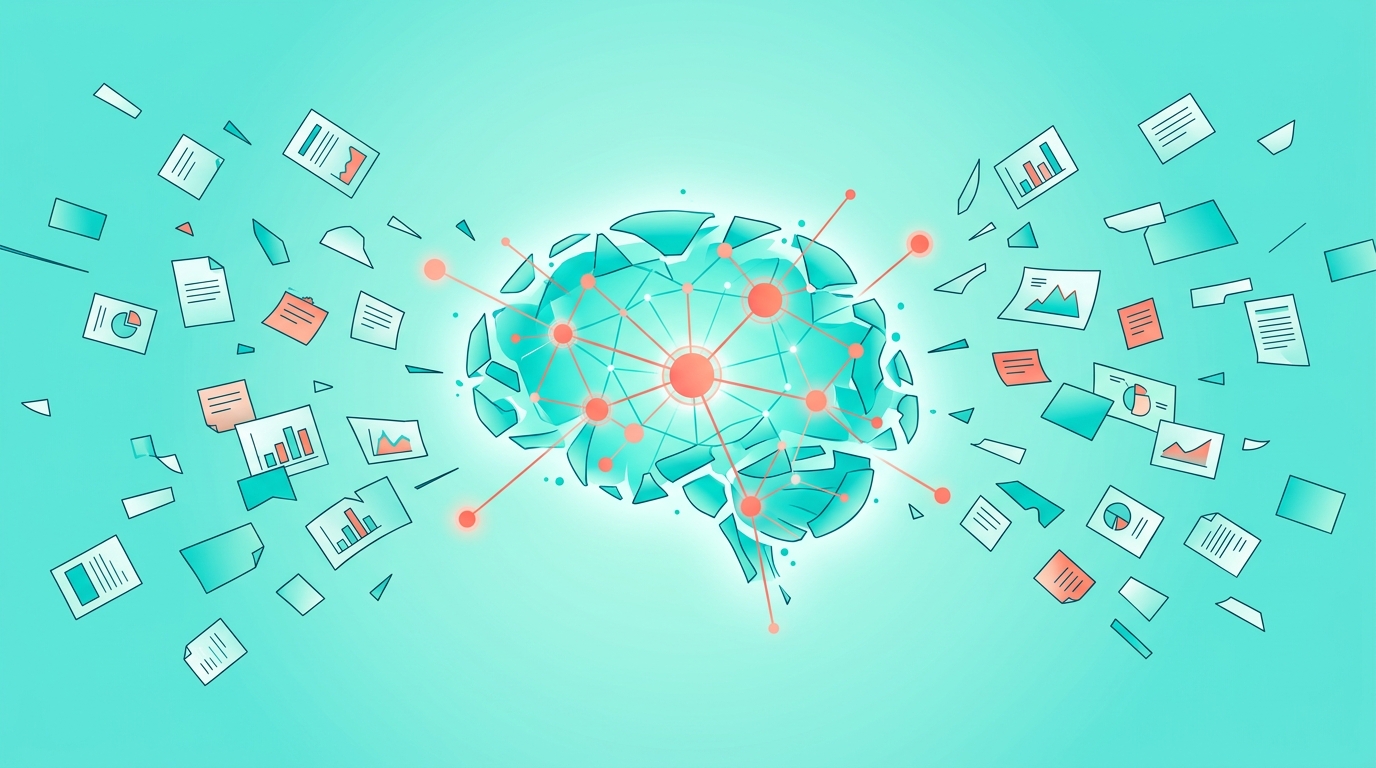
Part 1 of 3. Together, these posts explain the why, the what, and the how of building a second brain.
One of the biggest benefits of AI is the ability to make knowledge persist, and to do it more easily than ever before. Not just the knowledge in our heads, but the knowledge sitting in databases, in our teammates’ heads, in our emails, in our notes, and in dozens of other places.
Databases and knowledge management systems are nothing new, of course. They have been around for a long, long time. So what makes today’s IT environment different? It’s the ability to build what some people are now calling a second brain for your operation.
In this series, I’ll explore the second brain concept. This first post is about the why. As in, why should you build one at all? What’s the point?
The series will focus on marketing operations and teams, whether you’re a one-person marketing powerhouse or part of a larger group of professionals. A second brain can even be shared outside your organization, within limits.
The big idea is simple. You take knowledge that would otherwise live in a hundred scattered places and put it into a system your AI agents can access on demand. What makes this so appealing is that you no longer need everything organized into strict databases the way you did in years past. You can store data in many different formats, then let the right AI systems pull what they need when they need it. And by data, I mean everything: loose ideas and unstructured writing all the way down to traditional databases in clean rows and columns.
So let’s talk about why you might want to build a second brain, and what you give up by not having one.
Why your marketing team needs one
Institutional memory outlasts turnover. People leave. When they do, the campaign logic, the brand voice notes, and the hard-won context behind why you killed that one idea tend to walk out the door with them. A second brain keeps that knowledge in the building. The person moves on. The thinking stays.
Onboarding gets faster. New hires and contractors ramp in days instead of months. The playbooks, the past results, and the decision history are all searchable, not trapped in one veteran’s head. You spend less time explaining and more time shipping.
You stop reinventing the same wheel. That email sequence you wrote last spring, that persona doc, that landing page test from eighteen months ago: each one is a single search away instead of a painful rebuild from scratch. Good work gets reused. Effort compounds.
Knowledge compounds instead of evaporating. Every campaign post-mortem, every keyword study, every customer insight adds to a growing asset rather than scattering across Slack threads, inboxes, and forgotten drives. Over time, the second brain becomes one of the most valuable things your team owns.
AI gets better inputs. A clean, structured knowledge base is the raw material for AI assistants, custom agents, and automated reporting. Garbage in, garbage out is the old warning. The reverse is just as true. Good knowledge in means good output out, and a second brain is how you feed the machine well.
Consistency holds across channels. Messaging, positioning, and brand standards live in one source of truth. The ads, the website, and the sales deck actually agree with each other, because they’re all drawing from the same well.
Decisions get faster and sharper. When past performance and the reasoning behind it are at your fingertips, you argue from evidence instead of memory and gut. Meetings get shorter. Calls get better.
Cross-functional handoffs stop leaking. Marketing, sales, and leadership pull from the same shared context. Less gets lost in translation, and fewer things fall through the cracks between teams.
What comes next
None of this requires you to become a database administrator. That’s the part worth sitting with. The barrier that kept most marketing teams from building real knowledge systems, the need to structure everything perfectly up front, is largely gone. You can start messy and let the AI do the heavy lifting on retrieval.
In Part 2, we’ll get into the what. What actually goes into a second brain, what forms that knowledge takes, and how to think about the pieces. In Part 3, we’ll cover the how, with a practical path to building one for your own operation.
For now, the takeaway is this. The knowledge is already there. A second brain just stops it from leaking away.
Find out how to grow your marketing with the professional marketing minds at Ambient Array.